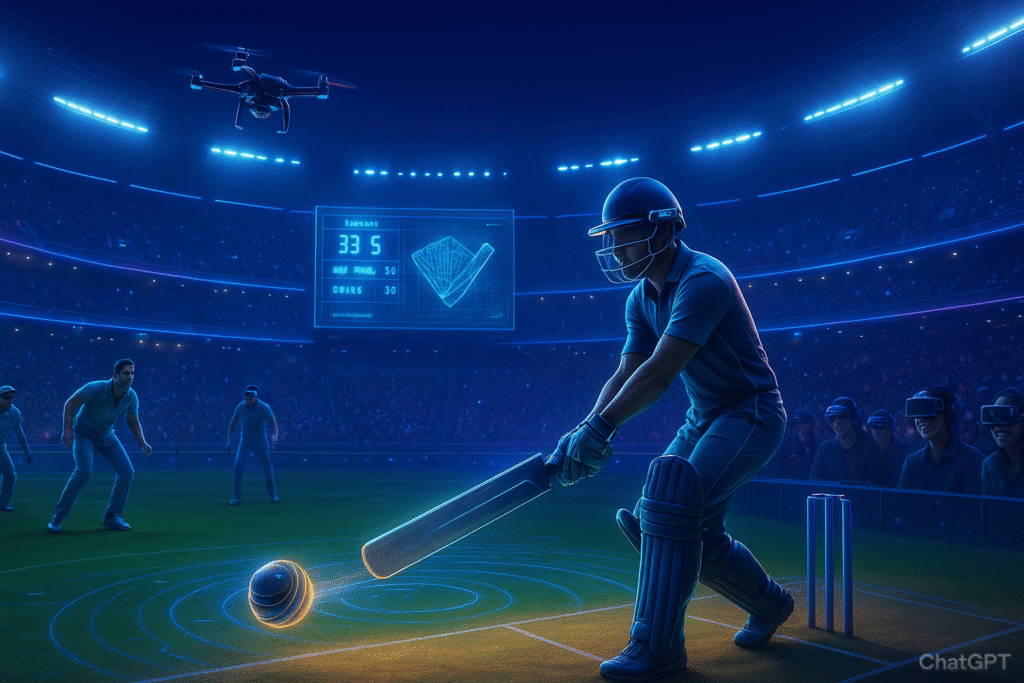
intruduction
There have always been new and old ideas in cricket. From handwritten scorecards in the 1800s to ultra-HD broadcasts in the 21st century, technology has always impacted the game. In 2025, AI, data analytics, VR, smart wearables, and digital tools will help cricket move into a new tech age. Fans will be able to play the game.
This blog is about how cricket technology will change the way players get ready, coaches plan, fans get involved, and officials make choices in 2025. These trends show how cricket will alter in the future, whether you are a fan, an expert, or a blogger.
1. AI in Cricket
AI is one of the most important instruments in cricket these days. It will be used in many different sectors of the sport by 2025:
�� Keeping an eye on how well the players do
AI algorithms keep track of how you swing, what shots you take, how you move your feet, and how you modify the direction of your strokes.
AI looks at the seam position, the angle of release, and changes in speed to find strategies for bowlers to get better.
For example, AI can find out why a batter has trouble hitting left-handed spin and then suggest drills to assist them improve.
�� Predictive Analytics
Teams now use AI systems to forecast how games will go, how the surface will act, and how tired the players are.
AI techniques make models that almost always work for fantasy leagues and betting markets.
Not getting hurt
Wearable equipment that leverages AI might be able to keep track of your sleep patterns, workload, heart rate, and muscle stress.
This information helps coaches keep an eye on players so they don’t become too weary during busy cricket seasons.
2. Augmented Reality (AR) and Virtual Reality (VR)
Virtual reality (VR) and augmented reality (AR) have changed the way people train for cricket and talk to spectators.
Training Players in Virtual Reality
Batters gain better at reacting quickly when they hit fake bowlers who throw the ball at different speeds and in varied ways.
Bowlers use virtual reality to practise bowling in varied weather and stadiums.
Teams get ready for their opponents by playing against their best players in a fake game before the real thing.
�� AR for Fans
People at stadiums can use AR glasses or mobile apps to see live stats as they watch the game.
Live video shows shot routes, striking zones, and heat maps directly on top of them.
Getting Fans to Take Part
Fans can feel like they’re in the stadium when they use VR headsets.
Fans can now watch the game in 3D thanks to ICC’s “virtual ticketing.”
3. Smart devices and wearables that can get online
Smart wearables are just as important to cricket as bats and balls are.
Smart bats
There are sensors on smart bats. Watch how high and quick the bat swings and how hard it hits.
Coaches utilise it in schools to assist players get better at timing and stroke play.
Health Trackers for Gamers
You may find out how much water you drink, how hot your body is, and how hard you work with wearable bands.
IoT dashboards show teams real-time stats for all players throughout games.
�� Chips that watch the ball
New cricket balls feature sensors that can tell how quickly they are going, how much spin they have, and how much the seam moves.
This information helps umpires and broadcasters keep an eye on the ball and say what they think.
4. DRS gets smarter with Hawk-Eye, Snickometer, and UltraEdge.
In 2025, a new version of the Decision Review System (DRS) came out.
Hawk-Eye 4.0 can now see the ball with incredible accuracy, which means there is less space for error.
The Snickometer and UltraEdge contain very advanced sound sensors that can find even the slightest edges.
AI helps people make decisions faster and fight less.
Umpires use smart earpieces so they can get information right away instead of having to watch long replays.
5. How to understand cricket news
Data will be the new money in cricket by 2025.
Plans for the Game
Analysts try to find their opponents’ weak spots, including which overs to attack or defend.
Teams use data dashboards to make quick decisions during games.
�� Searching for Players
AI-powered analytics help leagues like the IPL, BBL, and PSL locate new players.
Algorithms don’t just look at runs and wickets; they also look at how players handle stress, how fast they adapt, and how they react to different situations.
�� Getting Fans Involved
Fantasy cricket apps provide you a lot of information about players, heat maps, and your chances of winning.
To keep viewers interested, broadcasters employ statistics to give them new information.
6. Watching cricket on TV in 2025
People who like cricket now watch it in a whole new way.
8K Ultra HD cameras that can see everything around them
Now, cameras in stadiums show sports in 8K quality from every angle.
There are a variety of various camera angles that fans can choose from, like the batter’s point of view (POV).
AI Comments
Some TV stations use AI commentators who can help in more than one language, show live stats, and offer predictions.
AI commentary gives human commentators knowledge in real time, which is helpful.
�� An encounter that definitely catches your eye
The game is more exciting to watch with AR scorecards, holographic replays, and sound effects that sound like they’re at a stadium.
People at home feel like they’re at the game.
https://www.cricbuzz.com/
7. Smart stadiums
A majority of cricket stadiums will incorporate smart hubs by 2025:
AI-powered ticketing helps cut down on fake tickets and long lines.
Drones can take pictures of live games from the air.
Smart lighting and climate management let you play games even when the weather is terrible.
Fans may order food, watch replays, and keep track of player stats on their phones with stadium apps.
8. Blockchain and cricket
People have also used blockchain in cricket.
NFT Cricket Collectibles: Fans buy digital autographs, famous shots, and player NFTs.
Franchise leagues use smart contracts to make sure that players get the money they are owed.
Secure Ticketing: Blockchain stops people from selling tickets on the black market.
9. Use AI and social media to get people to follow you.
Bots that employ AI can tweet, post on Instagram, and make YouTube videos all at the same time.
Fans get personalised highlights based on their preferred athletes.
AI editing is used by platforms like TikTok and Shorts to swiftly make movies of games.
10. The Future: What will cricket technology look like in the future?
We might see the following by the end of the 2020s:
AI umpires making decisions on the pitch.
Smart helmets with augmented reality vision to help batters.
Robots to help get the pitch ready.
They use holograms to talk to people who play video games.
People have liked cricket for a long time. But technology will make it smarter, faster, and more equitable.
Last Thoughts
In 2025, cricket is more than just a bat and a ball. It’s also about smart data, AI, VR, wearables, and digital experiences for fans. Technology has changed every part of the sport, from how players train to how coaches coach to how umpires call games to how games are shown on TV.
This should help gamers do better and be safer.
This means more fun and more ways for fans to get involved.
It makes sure that everyone may play and that the game is fair.
As we move into the next decade, it’s clear that the future of cricket will be decided not only on the pitch, but also in the labs, data centres, and tech centres that keep it going.
Meta Description
“Find out how AI, VR, smart wearables, and advanced data analytics will change cricket in 2025.” It is now the future of cricket