Introduction
For some people, cricket is more than simply a sport; it’s a way of life, a passion, and even a religion. Over the years, the game has changed. Test matches were the most popular in the early 1900s. T20 leagues are the most popular in the 21st century. Cricket will change more than it ever has before as we get closer to 2025 and beyond.
future of cricket 2025, T20 leagues 2025, AI in cricket, technology in cricket 2025
Cricket is about to start a new phase that will be full of fun, new issues to solve, and new ideas. All of this is possible because to AI-powered technologies, futuristic stadiums, growing franchise leagues, and a new generation of global stars. But what will cricket be like in the future? Let’s take a closer look at the changes that are happening now and that will happen in the future.
Over the years, there have been many types of cricket, like Tests and T20s.
People used to assume that playing test cricket was the hardest way to find out how strong, patient, and skilled you are. But things changed when shorter formats like T20s and ODIs became popular.
People who like the five-day format of Test Cricket still do, but less people are watching it, and calendars are getting busier. This could herald the end of the style. People all throughout the world still care a lot about big events like India vs. Pakistan (if it comes back) and The Ashes.
One Day Internationals (ODIs) used to be the most popular format, but these days they are having a hard time keeping popular. It can be more exciting to watch T20 games than ODIs.
T20 Cricket Dominance: T20s are more than just games; they have fireworks, music, fan zones, and an exciting ending. Right now, the IPL, PSL, and Big Bash are the three biggest cricket leagues.
The Hundred and New Formats: The Hundred format in England has made 100-ball cricket a thing. Some other test leagues are trying to get kids interested by playing games that are even shorter.
There will be two types of cricket in the future: Test cricket, which is for status, and T20s, which are just for fun. It looks like ODIs won’t be around for much longer.
The future of cricket and how technology will change it
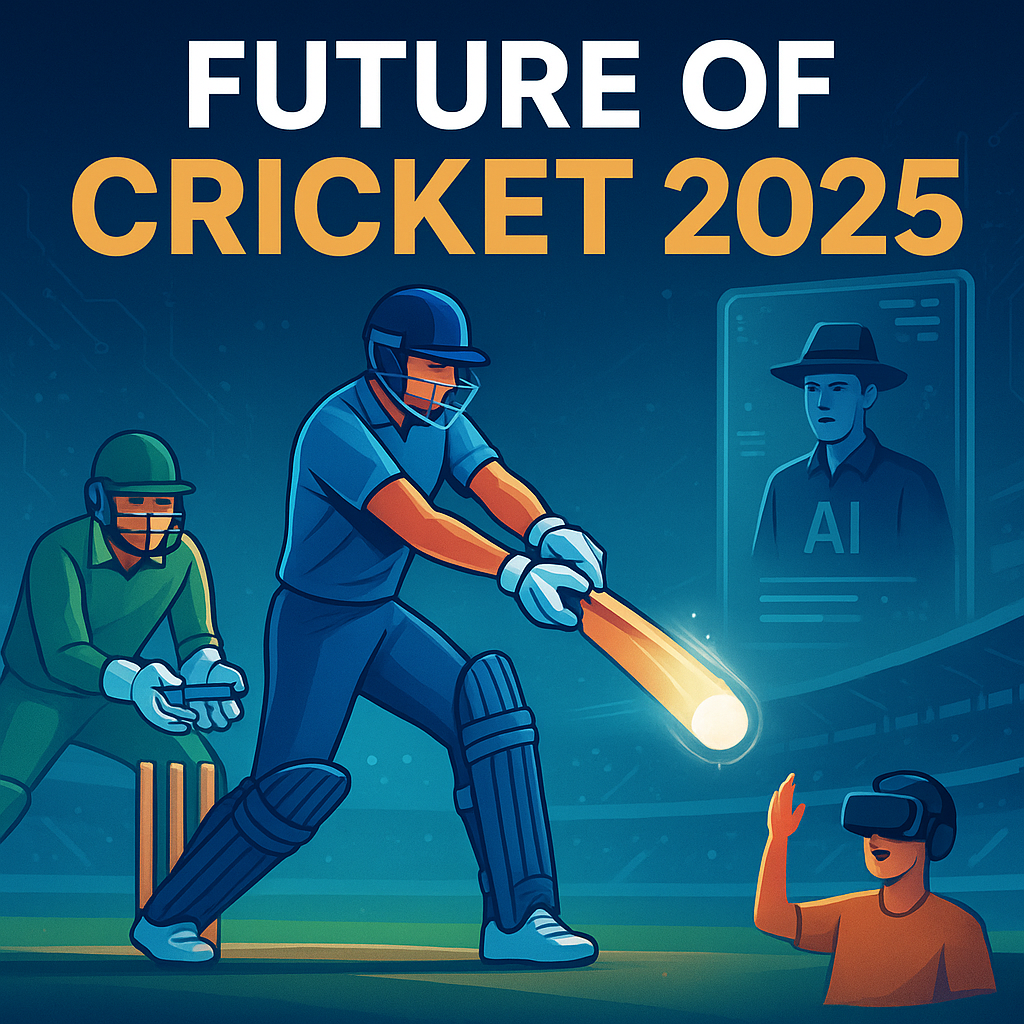
Technology will be the biggest change in cricket by 2025. People watch and play the game differently now that technology has altered.
Smart Wearables: Helmets, GPS trackers, and bat sensors powered by AI tell you right away how healthy the player is, how fast their bat is, and how well they hit.
AI-Powered Umpiring: The Decision Review System (DRS) is a lot better now since AI models that can anticipate the future make sure it is virtually always right. There will be fewer options that cause arguments.
Fans may now watch sports in virtual reality (VR) and feel like they’re in the best seats in the stadium without having to leave their homes.
Drone cameras and 360-degree views have made broadcasting more high-tech by giving viewers camera angles and information that is always up to date.
AI chatbots allow cricket fans from all over the world watch live games, choose fantasy teams, and obtain cricket news that is just right for them.
Data will make cricket more connected and immersive in the future.
The Rise of T20 Leagues: Where Power Is Now
Franchise leagues will be the most important part of cricket in 2025, and they might even be more important than international cricket.
The Indian Premier League (IPL 2025) is still the best league in the world. It has the best players, the most money from sponsors, and the most TV and streaming rights ever.
The Pakistan Super League (PSL) is known for finding and training new fast bowlers. It has made its brand strong, and it is still growing over the world.
The SA20 and the Big Bash League (BBL) are always getting bigger and better. There are always new ways to have fun with the games.
Major League Cricket (MLC USA): Cricket is finally becoming popular in the U.S. because MLC is bringing in big names and new fans from all over the world.
The money these leagues have brought to cricket has changed who is in charge. Stars are placing their league contracts ahead of their work for their country. This makes it tougher for national boards to keep track of how much work players are doing.
The biggest concern is that cricket could turn into football, where franchise leagues are more important than national sides.
The Next Group of Cricket Stars
In the future, new players will not only become renowned, but technology and leagues will also change cricket in big ways. A lot of young players will be in the news by 2025:
Young Indian bowlers like Shubman Gill and Yashasvi Jaiswal are following in the footsteps of Virat Kohli and Rohit Sharma.
Babar Azam is still the best player in Pakistan, but Shaheen Afridi and other up-and-coming players like Saim Ayub are helping to shape the country’s cricketing style.
Will Jacks, Cameron Green, and Harry Brook are three of the best young cricketers in England and Australia.
Afghanistan is getting stronger all the time because to Rashid Khan and other great players. The USA and the UAE are also putting together strong teams.
New global stars who can be the best in all formats and promote brands in the digital age will change the game of cricket.
The Business of Cricket: A Sport That Makes Billions
Cricket is more than simply a fun thing to do; it’s a billion-dollar business.
Companies spend billions of dollars to show the IPL, PSL, and ICC events. Disney+, Amazon, and YouTube all want more people to see their shows. This is making cricket more popular all across the world.
A lot of organizations, from airlines to crypto startups, are quickly starting to sponsor cricket teams so they can reach more people.
Fans of cricket can now buy digital souvenirs of great games, player NFTs, and even tickets that are stored on a blockchain.
Fantasy leagues and betting: Fantasy cricket is a huge business thanks to companies like Dream11 and FanDuel. Fans are on the edge of their seats with every ball.
Cricket is more than simply a sport now; it’s a business all over the world.
⚠️ There Will Be Problems in World Cricket
Cricket is getting bigger, yet it still has a lot of problems to deal with:
There are too many leagues and international events that are pushing athletes to their limits, which is making them tired.
ODIs are becoming less important. ODIs can become out of date if less and fewer people watch them.
Scheduling Problems: National boards have a hard time putting international cricket and franchise leagues on the same calendar.
Keeping Test Cricket Alive: Keeping the old format going even if fewer people want to play it.
Even when a lot of money is coming in, people are still worried about match-fixing and corruption.
Cricket needs to keep up with the times and make sure its players are safe and having fun.
What will cricket be like in 2025?
People think that cricket will happen in the future:
The sport will be played in additional places, like the US, Canada, and certain European countries.
Put Tech First: AI, VR, and analytics will make the game more exciting and easier to follow.
Take a look at League Domination. Franchise cricket can be the most important thing, while international cricket might only happen in big tournaments.
Make Hybrid Players: The best cricket players will be able to run businesses, stay in shape, and look at stats.
Get More People to Follow You: Streaming and 5G will add billions of new cricket fans to the game.
The future of cricket is about combining old and new ideas so that the game’s core stays the same while still moving ahead.
�� Finally
In 2025, cricket will have a lot of interesting, strange, and spectacular things happen. Cricket is more global and futuristic than ever thanks to T20 leagues, AI-driven technology changing the game, and new superstars becoming recognized.
But the hardest part is making sure everything goes well: making sure Test cricket looks good, making sure players don’t work too hard, and making sure everyone can play the game fairly.
The next era of cricket will be unlike anything you’ve ever seen, whether you favor Test cricket, T20 cricket, or are just getting into the game because of AR stadiums and fantasy leagues.